Anaba OffJapan
Overview

Hakone Onsen Areas
| Area | Water Type | Best For | Access |
|---|---|---|---|
| Hakone-Yumoto | Simple thermal | Largest selection, easy access, first-timers | 85 min from Shinjuku (Romancecar) |
| Gora | Sulfate spring | Luxury ryokan, high-quality alkaline springs | 40 min from Hakone-Yumoto (Tozan Railway) |
| Miyanoshita | Simple thermal | Classic onsen town atmosphere | 20 min from Hakone-Yumoto |
| Sengokuhara | Chloride spring | Scenic views, fewer crowds | Bus from Hakone-Yumoto |
| Lake Ashi area | Sulfuric spring | Stunning lake/Mt Fuji views | Bus from Hakone-Yumoto or Moto-Hakone |

Onsen Water Types in Hakone
Hakone has 16 distinct onsen sources (gensen), each with different mineral compositions. Here's a breakdown of the main types you'll encounter:
| Water Type | Key Minerals | Feel | Best For | Locations |
|---|---|---|---|---|
| Simple thermal | Sodium, calcium | Gentle on skin | Sensitive skin, first-timers | Hakone-Yumoto, Miyanoshita |
| Sulfate spring | Sulfur, calcium | Silky smooth | Skin beautification | Gora, Kowakudani |
| Chloride spring | Salt, magnesium | Retains heat | Warming the body | Sengokuhara |
| Iron spring | Iron, bicarbonate | Warmer feel | Anemia, fatigue | Odawara area |
Note: The sulfuric smell you sometimes notice near Owakudani is volcanic gas, not the onsen source itself. Most Hakone onsen are odorless. Don't let the sulfur reputation put you off — your actual bathing experience will be clean and fresh.

Onsen Accommodation by Experience Type

Luxury Ryokan with In-Room Onsen
| Property | Area | Water Type | Private Onsen | Rate/person |
|---|---|---|---|---|
| Hakone Ginyu | Gora | Sulfate spring | All rooms have open-air bath | ¥50,000–100,000 |
| Kinnotake Sengokuhara | Sengokuhara | Chloride spring | In-room tub with Fuji view | ¥45,000–90,000 |
| Gora Kadan | Gora | Sulfate spring | Select rooms; shared onsen also | ¥80,000–150,000 |

Mid-Range with Great Onsen Facilities
| Property | Onsen Feature | Rate/person |
|---|---|---|
| Hakone Suimeisou | Large garden rotenburo (outdoor bath), two types of indoor baths | ¥20,000–35,000 |
| Fujiya Hotel | Historic Roman bath (not onsen), plus Japanese onsen wing | ¥40,000–80,000 |
| Yama no Chaya | Intimate rotenburo with forest view | ¥15,000–22,000 |

Budget Onsen Options (Day-Use)
| Facility | Type | Price | Hours | Highlights |
|---|---|---|---|---|
| Tenzan Onsen (Miyanoshita) | Large public | ¥1,500 | 10 AM–10 PM | River-view rotenburo, 3 different baths |
| Hakone Yuryo (Miyanoshita) | Private + public | ¥2,500 public, ¥3,600 private | 10 AM–9 PM | English-friendly, tattoo-friendly, bookable private baths |
| Yunessun (Miyanoshita) | Theme park | ¥4,500 adults, ¥3,000 kids | 9 AM–7 PM | Family-friendly, wine/coffee novelty baths |
| Hakone Hot Spa Esperanto (Gora) | Public | ¥2,000 | 10 AM–8 PM | Multi-level, indoor/outdoor baths |
Onsen Etiquette: A Practical Guide
Step by Step
- Enter changing room: Remove shoes. Strip completely. Place clothes in basket or locker.
- Wash thoroughly: Use the shower station (small stool, handheld shower). Wash everything — hair, body, between toes. You must be perfectly clean before entering the bath.
- Enter onsen: Gently step into the bath. Fold your small towel and place it on your head or beside the bath — never in the water.
- Soak: 10–15 minutes per session is standard. Exit, cool down, re-enter if you like.
- After: Towel off. Return to changing room. Moisturize — onsen water is mineral-rich and can dry your skin.
Pro Tips
- Towel on head: This is the traditional style. It keeps your hair dry and signals relaxation.
- Drink water: Onsen soaking dehydrates you. Most facilities have water coolers in the changing area.
- Tattoo policy: Increasingly relaxed. Hakone Yuryo allows tattoos. Tenzan Onsen restricts them. Always check individual policies.
- Swimsuits: Not allowed in traditional onsen. Yunessun's novelty baths are the exception.
- Best times for empty baths: Early morning (6–8 AM) or late evening (9–11 PM). The busiest time is 6–8 PM, right after check-in and before dinner.
Seasonal Onsen Guide
Each season transforms the onsen experience completely. Here's when to visit based on what you're after:
| Season | Outdoor Temp | Water Temp | Experience | Best For |
|---|---|---|---|---|
| Winter (Dec–Feb) | 2–8°C | 42°C | Snow-view rotenburo, steaming contrast in cold air | Peak onsen season — book 2–3 months ahead |
| Spring (Mar–May) | 10–20°C | 41°C | Cherry blossoms near outdoor baths | Photogenic onsen |
| Summer (Jun–Aug) | 25–35°C | 40°C | Cool evening dips, river views | Best deals — ryokan discount 30–40% |
| Autumn (Sep–Nov) | 10–18°C | 42°C | Autumn leaves over rotenburo | Most scenic season — my personal favorite |
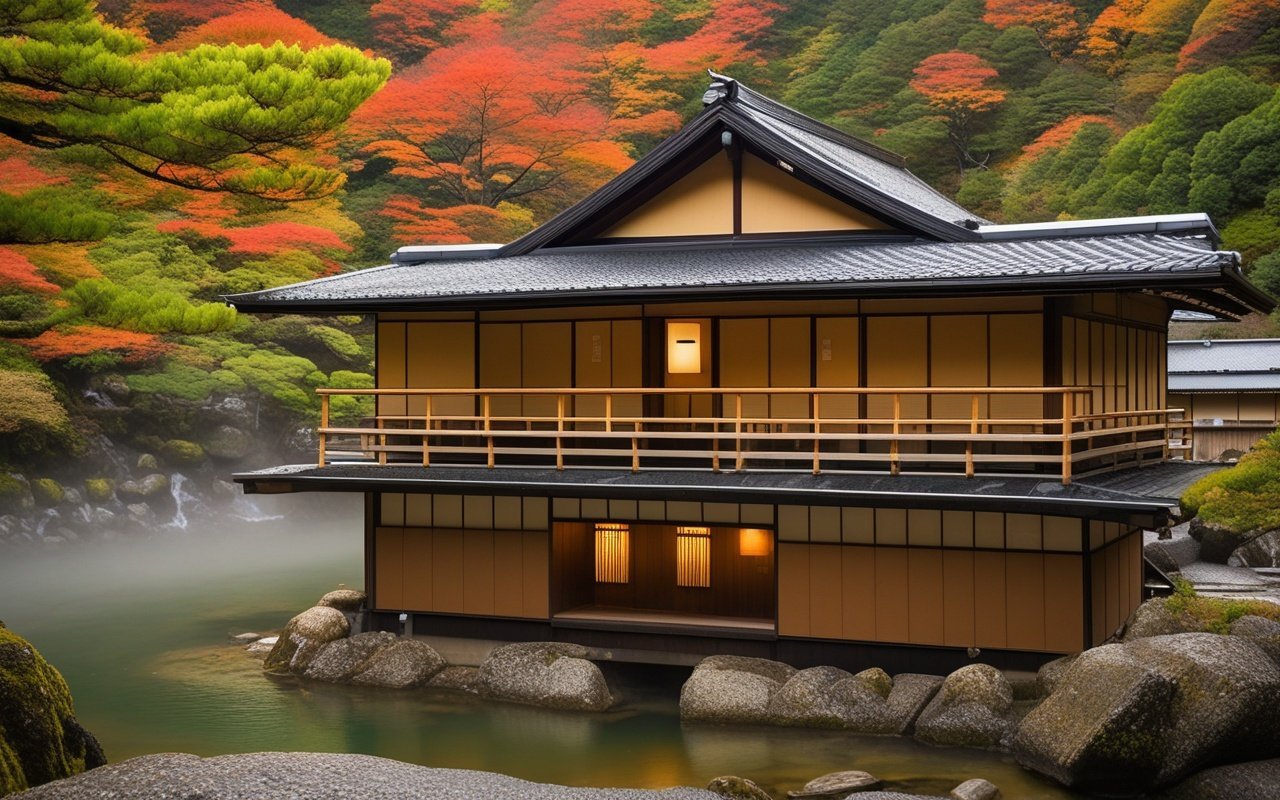
My recommendation: I visited Gora Kadan in November and the view from the rotenburo overlooking maples in full autumn color was worth every yen. If budget is a concern, November weekdays offer autumn colors at off-peak prices — the sweet spot for value.
Budget tip: Monday to Thursday stays are typically 20–30% cheaper than Friday–Sunday. Summer offers the deepest discounts at 30–40% off peak rates. Book your stay at Enoshima Hotel — seaside accommodation with stunning ocean views
Getting There
To Hakone-Yumoto: Odakyu Romancecar from Shinjuku (85 minutes, ¥1,240). Many ryokan offer free shuttle buses from the station. To Gora: From Hakone-Yumoto, take the Hakone Tozan Railway (40 minutes). This area has the highest concentration of luxury ryokan.
To Yugawara (budget alternative): JR Tokaido Line from Tokyo to Yugawara Station (90 minutes, ¥1,980). Yugawara is quieter and more affordable.
To Odawara area: JR Tokaido Shinkansen from Tokyo (35 minutes, ¥3,600), then local bus. Several day-use onsen facilities are clustered here.
Yugawara: The Affordable Alternative
Yugawara is often called "Hakone's little sister" — the same volcanic hot spring water at roughly half the price. I spent a weekend at a family-run minshuku here last fall and paid ¥14,000 per night for a tatami room with dinner and breakfast included.
| Aspect | Hakone | Yugawara |
|---|---|---|
| Nightly rate (mid-range) | ¥20,000–35,000 | ¥10,000–18,000 |
| Onsen variety | 16 sources | 5 main sources |
| Crowd level | Busy year-round | Quieter |
| English support | Widely available | Limited |
| Access from Tokyo | 85 min (Romancecar) | 90 min (JR) |
Recommended in Yugawara:
- Yugawara Onsen Kameya: ¥15,000/night, family-run, 4 private family baths (free, first-come)
- Hotel New Yokose: ¥18,000/night, ocean-view rotenburo, English-friendly Book Sotetsu Hotels The Splaisir Yokohama — modern comfort in Minatomirai with easy access to attractions
- Matsunoi: ¥12,000/night, tatami rooms, excellent kaiseki
Yugawara is ideal for budget-conscious travelers who still want an authentic onsen experience. The town is smaller and less touristy — more of a local's retreat than an international destination. \n\n## What to Expect\n\nTraveling around Kanagawa is straightforward thanks to the extensive rail network. Trains run frequently from early morning until around midnight. Expect to walk a fair amount - comfortable shoes are essential. Many temples and shrines have uneven stone paths and stairs. Ticket machines at stations have an English language option. If you get lost, station staff are helpful and many speak basic English. Taxis are reliable but expensive; only use them for short trips or when trains have stopped.\n\n\n### Nearby Recommendations\n\nAfter exploring the main attractions, consider visiting nearby areas for a more complete experience. Most destinations are within 30 minutes of several other interesting spots by train. Check the local tourist information center for day-trip combinations and discount passes that cover multiple attractions in the area. Many hidden gems are just a short walk or one train stop away from the main tourist hubs.\n\n\n### Local Tips\n\nFor the best experience, locals suggest exploring side streets away from the main tourist areas. Some of the best restaurants and shops are hidden down narrow alleys. Ask your accommodation staff for their personal recommendations - they often know the best local spots not found in guidebooks. If you see a line of locals waiting outside a restaurant, join it - it's usually worth the wait.\n\n\n## Packing Essentials\n\nFor a trip to Kanagawa, pack comfortable walking shoes as you will be on your feet exploring temples, shrines, and neighborhoods. A reusable water bottle is essential - tap water is safe to drink and there are public fountains at major stations and parks. A small umbrella or light rain jacket is useful year-round, as rain can arrive unexpectedly. Power banks are recommended since you will rely on your phone for maps and translation. A small daypack for daily essentials makes sightseeing much more convenient.\n\n\n## Money-Saving Tips\n\nKanagawa offers many ways to save money without sacrificing experience. Purchase a day pass if you plan to visit multiple attractions in one area. Eat lunch at local department store basements (depachika) where prepared foods are high quality and reasonably priced. Look for discount tickets at convenience store ticketing machines. Consider staying in business hotels or capsule hotels in less central locations for significant savings. Many museums and temples offer discounts for students and seniors.\n
Frequently Asked Questions
Q: What's the difference between a ryokan and an onsen hotel? A: Ryokan=tatami floors, futon beds, and kaiseki dinner. Onsen hotel=can be Western-style room with hot spring access. The onsen quality is similar — choose based on whether you want the full tatami/futon/kaiseki experience (ryokan) or a more familiar Western-style room (onsen hotel).
Q: Do I need a room with private onsen? A: Not at all. Shared onsen in ryokan are excellent and part of the experience. Private reservable baths (¥1,000–3,000 for 45 minutes) are great for couples, families, or anyone uncomfortable with public bathing. About 60% of mid-range and above ryokan offer them.
Q: What should I bring to an onsen? A: Nothing — ryokan provide everything: towels (large and small), yukata (worn to and from the bath), soap, shampoo, conditioner, and basic skincare products, Bring your own moisturizer as onsen water can dry skin.
Q: Are onsen accommodations expensive? A: From ¥8,000 to ¥150,000+ per person. Weekday stays at mid-range properties (¥15,000–25,000) offer the best value. Consider it an experience, not just a place to sleep.
Q: What's the best season for onsen? A: Winter (December–February) is peak season — the contrast between cold air and hot water is unmatched. Autumn offers the most scenic views. Summer has the best prices.
Insider Tips
Booking Strategy
- Book 2–3 months ahead for winter weekends (peak season)
- Weekday stays are 20–30% cheaper — Monday to Thursday offers the best value
- Use Japanese booking sites like Rakuten Travel or Jalan for better deals than English-language sites — I saved ¥8,000 per night on a Hakone Suimeisou stay this way
What to Pack
- Moisturizer — onsen mineral water dries skin
- Water bottle — stay hydrated between soaks
- Cash — many smaller ryokan and onsen facilities prefer cash
Time Management
- Check-in: usually 3–4 PM. Arrive 30 minutes early to complete paperwork
- Kaiseki dinner: served 6–7 PM. Don't be late — meals are served course by course
- Morning bath: 5–6 AM opening is the quietest time
- Check-out: 10 AM. Plan to maximize your morning soak
The ultimate Kanagawa onsen experience: a Hakone ryokan in January, outdoor bath (rotenburo) in 2°C air and 42°C water, followed by a 10-course kaiseki dinner featuring seasonal local ingredients. Whether you splurge on Gora Kadan or opt for a budget-friendly day at Tenzan Onsen, the hot springs of Kanagawa offer a uniquely Japanese experience that rewards slowing down and soaking in — literally — everything the region has to offer.
Three takeaways:
- Winter is best — the cold-air/hot-water contrast is the most satisfying onsen experience
- Try different water types — one night in Gora (sulfate) and one in Sengokuhara (chloride) to compare
- Use day-onsen as a trial — visit Tenzan Onsen or Hakone Yuryo before committing to a full ryokan stay
Kanagawa Tourism Official Site
Related Articles
Nearby Recommendations
After exploring the main attractions, consider visiting nearby areas. Most destinations are within 30 minutes of several other interesting spots by train. Check the local tourist information center for day-trip combinations and discount passes. Many hidden gems are just a short walk or one train stop away.
What to Bring
Smart travelers to Kanagawa pack light and bring layers. The weather can shift from warm to cool within a day. A portable WiFi device or SIM card is essential for navigation. Bring a small notebook for recommendations. Hand sanitizer and tissues are useful. Consider packing a foldable tote bag for souvenirs.
Conclusion
Kanagawa Onsen Accommodation — Hot Spring Ryokan & Day-Use Baths is an incredible destination that offers something for every traveler. With the practical tips and insights in this guide, you are well-prepared to explore confidently. Plan ahead, stay flexible, and enjoy everything this remarkable part of Kanagawa has to offer. Safe travels!